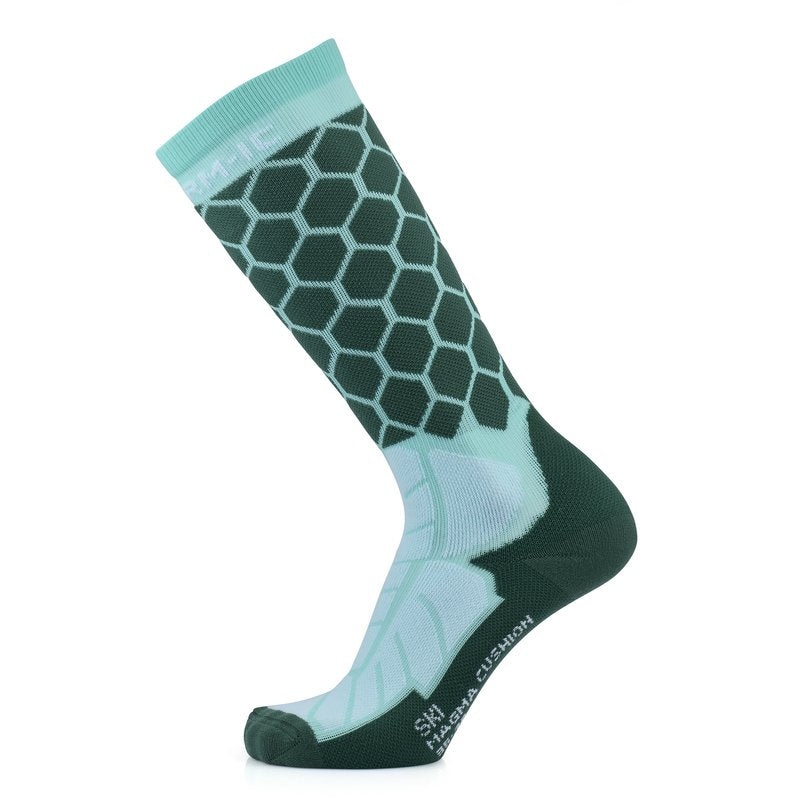
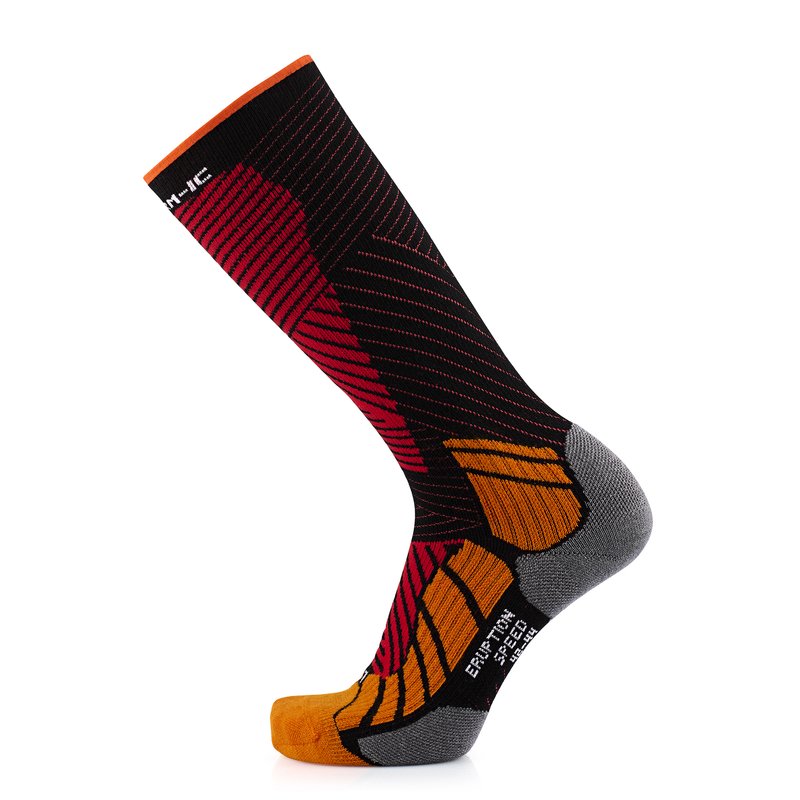
We’ve all had that sort of day. A cloudless sky, snow crunching under your skis, slopes still almost untouched. The sort of day you’d like to stretch out until the very last chairlift. And then, a few runs later, your toes start to get cold. Your shins make themselves felt with every step. And despite the ideal conditions, you can think of only one thing: taking your boots off.
The cause? We tend to think of ski boots first. However, socks play an often-underestimated role: they’re what keep your feet warm, wick away sweat and cushion every step against the boot shell.
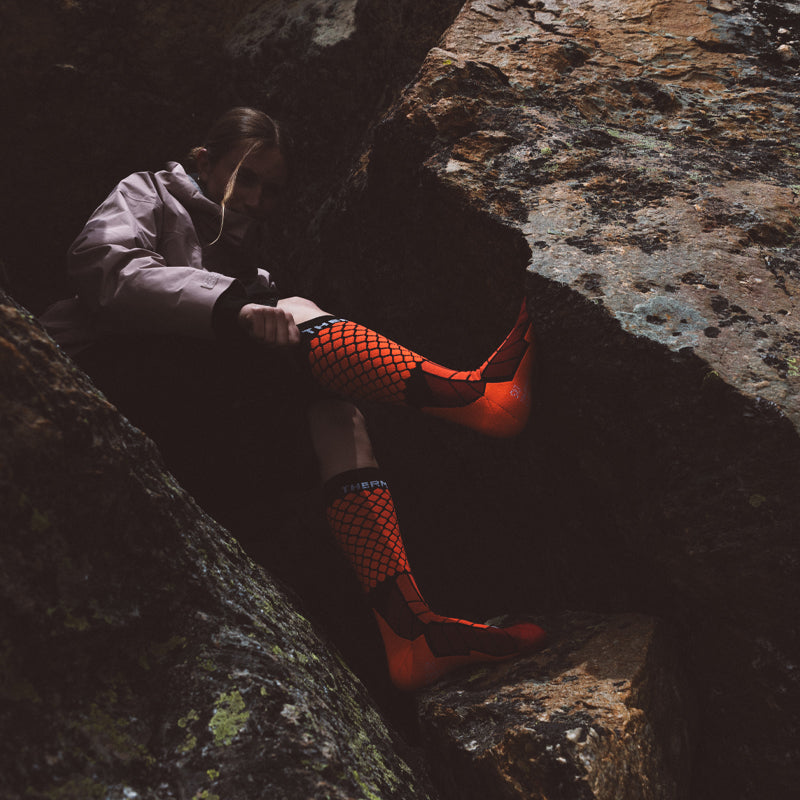
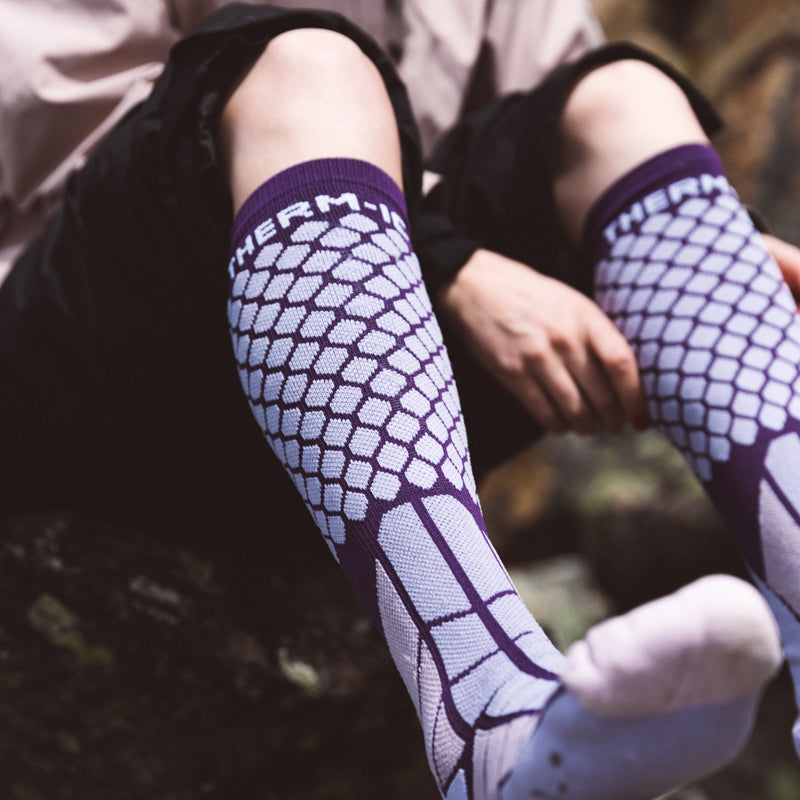
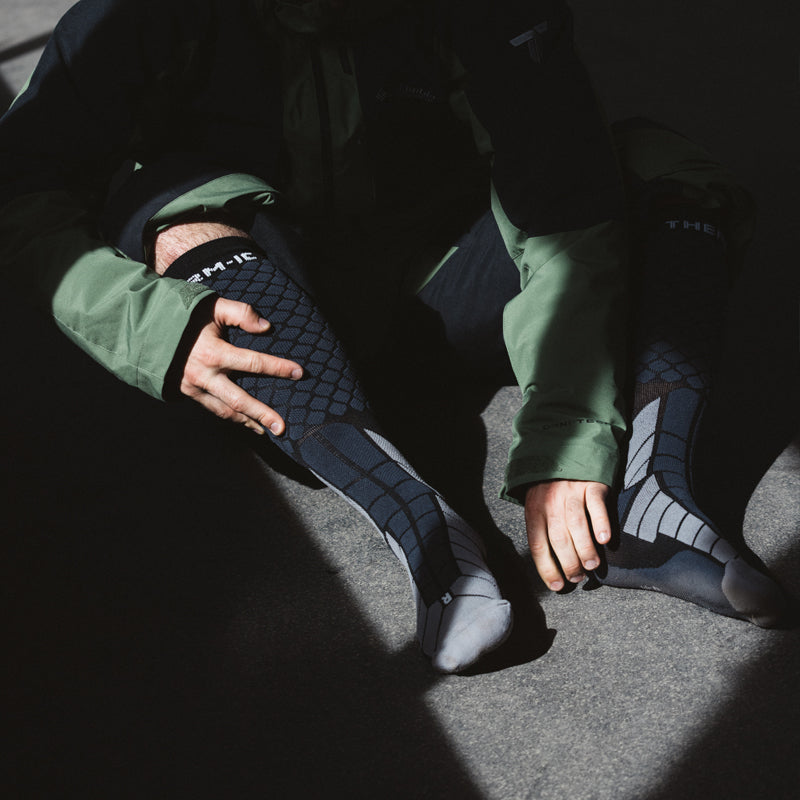
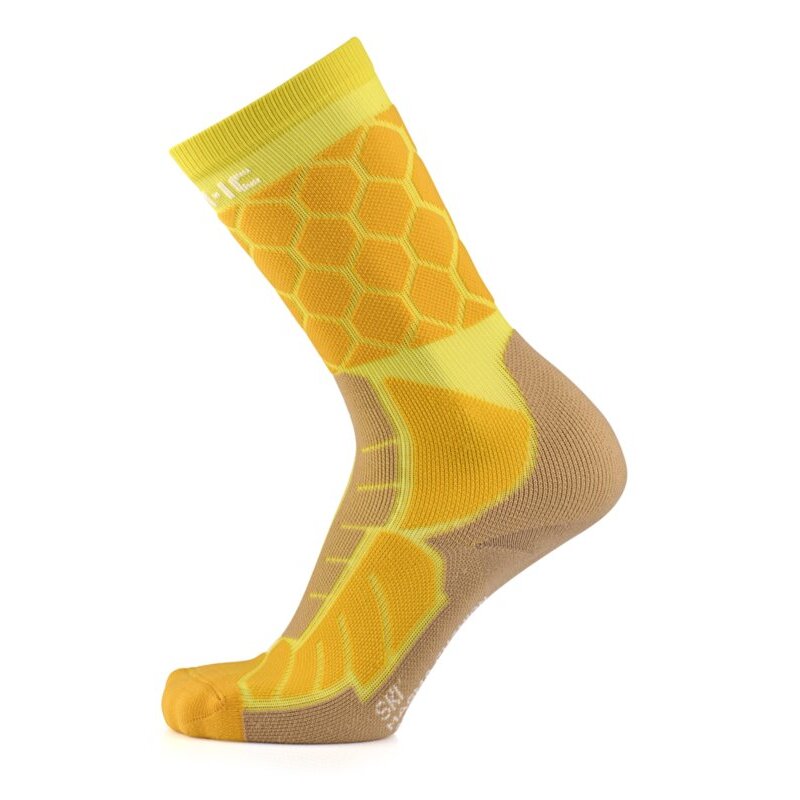
With this in mind, Therm-ic is launching two new models of warm ski socks: the Ski Magma Cushion ski sock and the Ski Eruption Speed ski sock. Comfortable ski socks for long days on the slopes, from the first turn to the final run.
How can you stop your feet getting cold whilst skiing? What socks should you wear with ski boots? How can you avoid pressure points? And finally, what are the best socks for keeping your feet warm whilst skiing? These are all questions that crop up as each season approaches. Find all the answers and advice in this article.
“Yet the role of the sock is often underestimated: it’s the sock that keeps your feet warm, wicks away sweat and cushions every step against the boot shell.”
“Comfortable ski socks for long days, from the first turn to the last run. ”
HOW CAN YOU AVOID COLD FEET WHILE SKIING?
When skiing, the cold often creeps in through your feet. Why is that? There are two main reasons: moisture and blood circulation. Two factors we don’t always think about, but which are enough to cut a day short.
1/ Moisture
On the run, your feet are working hard and sweating. On the chairlift, whilst stationary, damp feet cool down quickly. The result? Icy toes well before midday. A sweaty foot is a foot that will eventually get cold.
How can you avoid this? Forget cotton – which soaks up water like a sponge – and opt for warm, breathable ski socks made from technical fibres. They insulate against the cold whilst wicking away sweat. Proper warm socks for skiing all day long. In short, to keep your feet warm, you must first keep them dry!
2/ Blood circulation
Being far from the heart, your feet are the last to receive blood – and therefore the warmth it carries. However, a boot that’s too tight or a sock that constricts restricts blood flow. In other words, a constricted foot is a foot deprived of warmth.
How can you avoid this? By allowing your feet a little room to move. A well-fitting boot, yes; one that’s as tight as possible, no. Make the most of the chairlift to loosen the laces a few notches whilst you’re going up – this allows blood to flow to your toes again – then tighten them up again before setting off. The same principle applies to socks: they should support the foot without constricting it, right up to the calf.
“When skiing, the cold often creeps in through your feet. Why is that? There are two main reasons: dampness and blood circulation.”
“To keep your feet warm, you must first keep them dry!”
“In other words, a constricted foot is a foot deprived of warmth. ”
WHAT SOCKS SHOULD YOU WEAR WITH SKI BOOTS?
The answer will no doubt seem obvious: with ski boots, you wear ski socks. Not quite so simple, we grant you. A ski boot is a rigid shell that encloses the foot and applies pressure at very specific points. It therefore requires a sock designed specifically for it – not a pair of hiking or running socks. But you still need to choose the right ones.
How do you choose socks for skiing?
Here are our criteria for finding comfortable and warm ski socks:
1/ A breathable material
Merino wool, lyocell or polyamide: technical fibres that wick away sweat and dry quickly.
2/ The right thickness
Should you choose thicker socks for skiing? Not necessarily. A sock that’s too thick compresses the foot, restricting blood flow. Paradoxically, this makes the foot feel colder, not warmer. It’s not the thickness that provides warmth, but the material and the fit.
3/ Just one pair
Sometimes you might be tempted to wear two pairs on top of each other to keep warmer. This is a mistake: they’ll slip over one another and create creases.
4/ Sufficient length
Your sock should extend above the top of the boot. If it’s too short, the shell will rub directly against your skin.
5/ The right size
Check the size guide available on each product page. If you’re unsure between two sizes, go for the smaller one: the fabric stretches a little over time.
“A ski boot is a rigid shell that encloses the foot and applies pressure at very specific points. It therefore requires a sock designed specifically for it – not a pair of hiking or running socks.”
“Should you choose thicker socks for skiing? Not necessarily. A sock that’s too thick compresses the foot, restricting blood flow.”