Into Altaï: 10 good reasons to watch Camille Armand's film

Into Altaï: 10 good reasons to watch Camille Armand's film

“Into Altaï” is not “just” a freeride skiing film. It is a unique story at the crossroads of sport, travel and contemplation. An adventure that takes three high-level skiers and snowboarders – Camille Armand, Pierre Hourticq and Victor Daviet – to the far reaches of Mongolia, to the heart of a mountain and a traditional culture that is virtually untouched, where skiing is an ancestral practice. An incitement to nomadic life. An invitation to disconnect from our fast-paced society in order to better reconnect with our surroundings. An ode to friendship that proves that human bonds never take root as deeply as they do in rough and challenging terrain, when autonomy is total. It is also a way to test the technicality of Therm-ic products. In the place where it makes the most sense: in extreme conditions, where the cold is biting and thermal management becomes the key to a successful expedition.

By opening the most challenging lines of the five sacred peaks that dominate the Tavan Bogd massif, Camille Armand and his team take us on a powerful journey in a film that is both moving and aesthetically pleasing. And if you still need convincing, the freerider from Chamonix gives you 10 good reasons to dive into this freeride skiing project like no other.

‘Into Altaï’ is not ‘just’ a freeride skiing film. It is a unique story at the crossroads of sport, travel and contemplation.

1/ ‘BECAUSE IT'S A REAL ADVENTURE FILM, NOT JUST A QUEST FOR THE PERFECT TURN’

"We often go on expeditions hoping to find good snow. For this project, aware of the hostility of this mountain range, known for being dry and windy, the goal was elsewhere. We weren't looking for powder snow or the “golden turn”, but for adventure, as real and raw as possible. The initial intention was very clear: to discover remote areas where freeride skiing becomes a pretext for stepping out of one's comfort zone, immersing oneself in a traditional culture and experiencing a form of inner retreat. A “nature-painting” trip, nothing more. ‘

’The initial intention was very clear: to discover remote areas where freeride skiing becomes a pretext for stepping outside your comfort zone."

2/ ‘BECAUSE MONGOLIA IS A PLANET APART’

"Mongolia is three times larger than France, but has 20 times fewer inhabitants, most of whom live in the capital. It is a raw space where human beings seem to disappear into the immensity of the landscape. It is this rare, almost intimidating feeling of a seemingly endless horizon that we have tried to convey through “Into Altai”. The Altai Mountains, which constitute the wildest and most isolated region of Mongolia, stretch across the west of the country, bordering China, Russia and Kazakhstan. The Tavan Bogd massif – which we explored far and wide – is particularly inaccessible, hostile and therefore virtually untouched. Its peaks, which rise to over 4,000 metres, have only very rarely been skied. ‘

3/ ’BECAUSE MONGOLIAN MOUNTAINS ARE SACRED"

"The Tavan Bogd massif – which means “Five Saints” – is not only beautiful, it is also sacred. In Mongolian tradition, mountains have a spirit. They are protective entities that command respect. Aware of this symbolism, nothing made more sense to us than to link these five sacred peaks. The locals generally understood our desire to climb these mountains in order to elevate ourselves spiritually, but they seemed more sceptical about our plan to descend them on skis via the most challenging routes.‘

’The Tavan Bogd massif – which means “Five Saints” – is not only beautiful, it is also sacred."

4/ ‘TO RECONNECT WITH THE ANCESTRAL PRACTICE OF SKIING’

"Here, skiing is a means, not an end. It is a means of transportation rather than an object of pleasure. Historically, Mongolians have practised survival skiing rather than recreational skiing. Its use is deeply rooted in the local culture, as trappers used it to hunt, move between camps and watch over their herds. Let's say that “Into Altai” pays tribute to the original purpose of skiing: the art of moving around in the cold. ‘

’Historically, Mongolians have practised skiing for survival rather than for leisure."

5/ ’BECAUSE WE TRAVEL ON THE BACKS OF YETI CAMELS"

"We travelled for four days on the backs of “yeti camels” to reach the location where we then set up our base camp ourselves. This very authentic approach, and its deliberate slowness, allowed us to ease into the expedition very gradually, in a way that respected the territory. These camels are truly impressive, one of the most fascinating animals in Central Asia. They are true athletes of the cold. Their long, woolly coat, natural insulating undercoat and ability to reduce energy loss give them unparalleled resistance to temperature variations and extreme conditions."

6/ ‘FOR A TOTAL CULTURAL IMMERSION’

"Beyond the ski turns, this adventure offered us an authentic dive into Mongolian culture. A raw and deep immersion, in contact with this people who are quite cold at first glance, but who showed us rare kindness and overwhelming hospitality once the ice was broken.

Mongolians seem to be made of stone on the outside, but are very tender on the inside. During our journey across the country, we met families who had nothing – or very little – but who gave us everything. They welcomed us into their yurts with an extraordinary sense of sharing. ‘

’Mongolians seem to be made of stone on the outside, but they are very tender on the inside.‘

’We met families who had nothing but gave us everything.‘

7/ ’BECAUSE IT IS AN ODE TO FRIENDSHIP"

"This film is intended as a message: go on an adventure with your mates! Because the bonds of a rope team are never stronger than in these extreme and minimalist conditions, outside the comfort zone. Of course, we were all looking for our own personal adrenaline rush, but sharing it made it ten times better. There was no ego competition. Everyone rode at their own pace. The cohesion of the group and the overall harmony fuelled us with very positive energy. In Mongolia, freeride skiing has become a team sport. In fact, we made it a point of honour to conclude this project by climbing Nairamdal Peak as our fifth summit. This means “Friendship” and is located on the border between Russia, Mongolia and China. The symbolism was powerful, and the nod inevitable.

‘In Mongolia, freeride skiing has become a team sport.’

8/ ‘FOR THE INSPIRATION TO DISCONNECT’

"Disconnect to reconnect better. This is perhaps the most striking lesson learned from this expedition. We spent a lot of time far away from everything, close to a people who live on very little, according to ancestral traditions that seem untouched by the headlong rush of contemporary society. Their nomadic lifestyle gives them a freedom, autonomy and detachment that inspire me enormously. Taking a geographical step back allows for a very enriching inner step back, particularly in terms of the “why”. Why do we seek to step outside our comfort zone in this way? Why do we take risks? Why disconnect in order to shoot a film that is destined to end up on social media? I haven't found all the answers yet, but I have made progress in my thinking. ‘

’Their nomadic lifestyle gives them a sense of freedom, independence and detachment that I find hugely inspiring."

9/ ‘BECAUSE THE IMAGES ARE SUBLIME’

"At the start of the project, Yannick Boissonneux, the director, shared his enthusiasm for Mongolia with us, citing two reasons: the cultural richness of the land and the beauty of its virtually untouched mountains. We were not disappointed! A harsh winter – the driest in 10 years – and continuous gusts of wind carved out veins of snow and ice in the heart of the rocky mountainsides. The resulting images of skiing are quite unique."

10/ ‘FOR THE HARSH, EXTREME CONDITIONS’

"The Mongolian mountains are particularly inhospitable, with strong gusts of wind and extremely cold temperatures. Throughout our adventure, the thermometer fluctuated between -30°C and +10°C. In this context, thermal management becomes a challenge and heated equipment a real luxury. Frostbite can stop an expedition. Comfort is not a whim, it's one less mental burden and more enjoyment.‘

’Comfort is not a whim, it's one less mental burden and more enjoyment."

THERM-IC PRODUCTS USED BY CAMILLE ARMAND AND HIS TEAM DURING THE ‘INTO ALTAI’ EXPEDITION:

- The Thin Ultra Heat Liner S.E.T® heated undergloves or the Grip Ultra Heat lightweight heated gloves: "Particularly appreciated by the production team. Why? Because it's torture to hold a camera or fly a drone when it's -30°C outside. The heated gloves clearly saved their fingers."

- The warm mountaineering gloves “Grip Shield Gloves”: ‘A real game-changer because they combine all the qualities you need in the high mountains: breathability to wick away moisture on the way up; insulation to keep our hands warm on the way down; dexterity for technical manoeuvres; and durability to last throughout the adventure.’

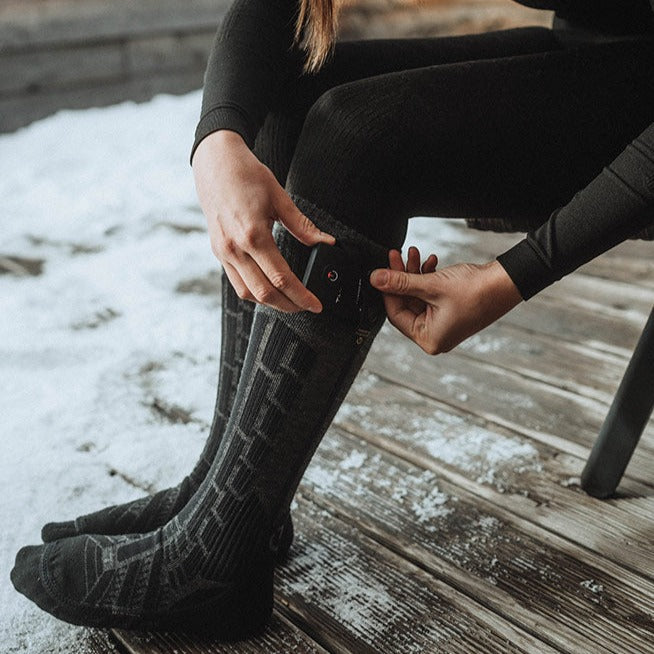
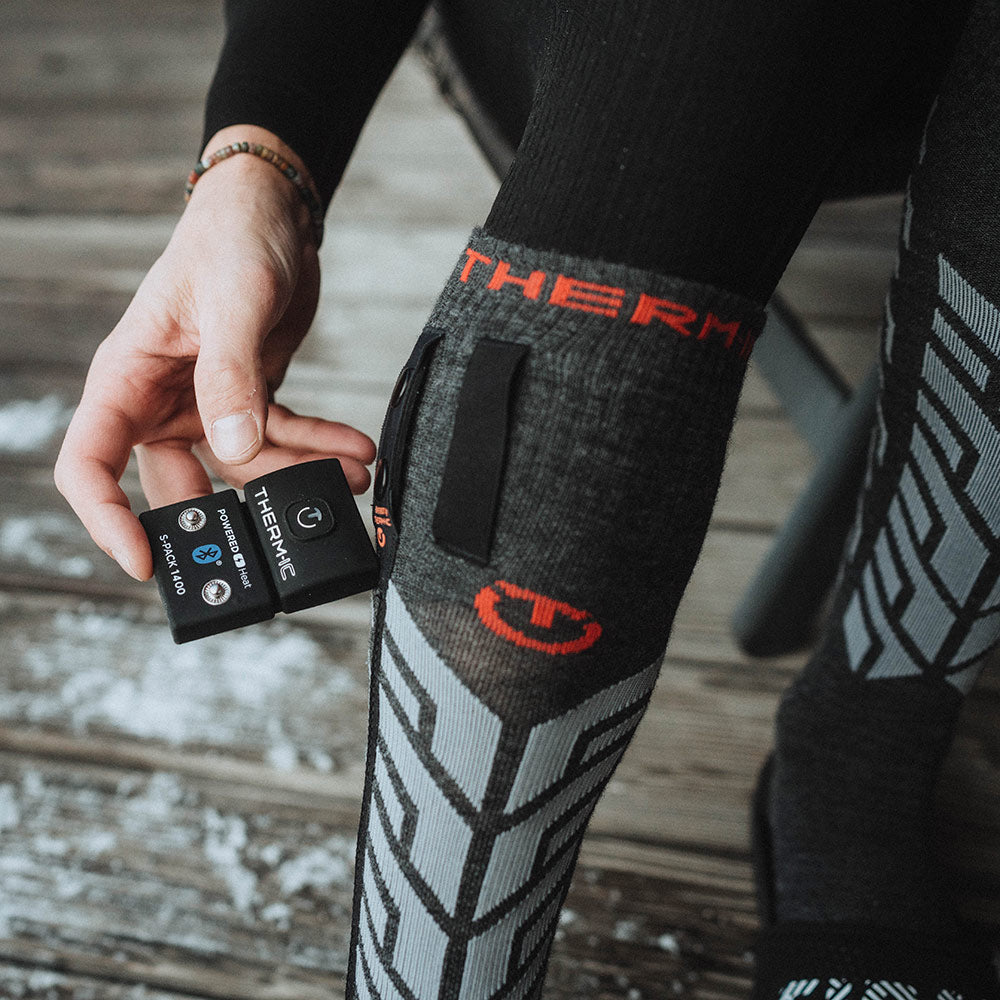
- Ultra Warm Comfort S.E.T® heated socks: "They greatly improved our adventure thanks to the little routine we followed: putting on our ski boots in our sleeping bags; activating the heated socks at 4 a.m., an hour before departure; then leaving them on medium heat to provide continuous warmth throughout the climb. This comfort protects our feet and allows us to start the day without fear of the cold.‘